Coming to America

This article is part of The Co-Lab Brief Volume 10, which emphasizes the student experience. You can read it here.
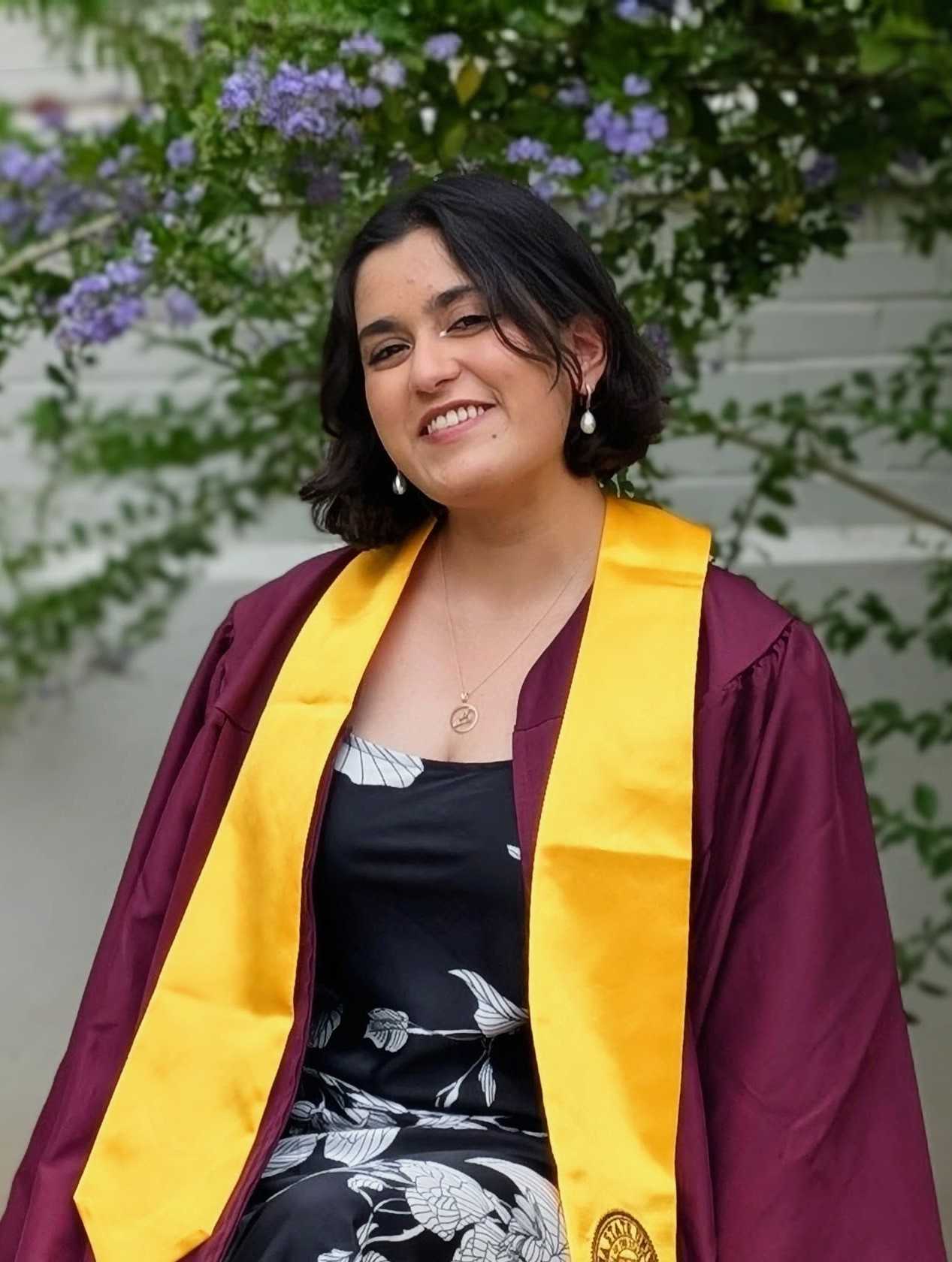
Author details: Pranshi Vats; Master’s Global Management - Global Business; Graduating May 2026
The first thing I noticed when I arrived at my freshman dorm at Arizona State University had nothing to do with the campus, the weather, or even the people. It was the floors.
What I had always called the ground floor was labeled the first floor. My first floor was their second. It sounds trivial, and I tell it as a joke now, whenever someone asks me what arriving in America felt like, but for two weeks, I got lost constantly. Not because I wasn't paying attention, but because the most basic navigational logic I had built over eighteen years simply didn't apply anymore. That experience, small as it was, became my first real lesson in what it means to study abroad: the rules you arrive with are not always the rules in play.
I came to the United States from India in the fall of 2021, eighteen years old, enrolled as an undergraduate in International Trade at the Thunderbird School of Global Management at Arizona State University. It was the first time in my life that I had spent more than a week away from home. The decision carried weight — not just mine, but my parents' too. We took on a student loan together. We calculated the distance together. We chose, together, to bet on a version of my future that none of us could fully picture.
So why do it? Why absorb the financial pressure, the cultural displacement, the loneliness of building a life without a support system nearby?
Because I was looking for a return on investment that couldn't be measured in a paycheck. I had always known I liked problem-solving, but I had struggled to demonstrate that capability in theory-heavy learning environments that rewarded memorization over application. I needed a system that would let me make things, test things, and fail at things in real time. ASU, I learned, offered exactly that: a practical, project-based curriculum inside one of the most internationally diverse student bodies in the country. Thunderbird's alumni network spanned continents, and the student success stories were visible and concrete. I could see where the path led. I wanted to be on it.
What I couldn't see (and what no one tells you) is how much of the real curriculum is invisible.
In my first year, I attended every class. I submitted every assignment. By every measurable standard, I was doing fine. But I was doing it as a shadow. The actual education — the networking conversations, the office hours, the student organizations, the competitions, the informal rooms where opportunities get distributed — was happening all around me, but I was not in it. Not because the doors were locked, but because I didn't know that they existed, and I was too consumed by the effort of basic survival to go looking. I was spending all of my energy trying not to say the wrong thing, not to misread a social cue, not to be visibly confused in a system that felt enormous and indifferent.
I had always been extroverted. Loud, even. But something about feeling perpetually misunderstood, not dramatically, not cruelly, just subtly and persistently, made me smaller. I became more careful. More hesitant. Confidence, which I had never thought much about because I had always had it, started to feel like something I had to actively reconstruct, piece by piece. I looked at career fairs and case competitions and felt, viscerally, that they were designed for students who already knew the rules. Those who had older siblings and friends who had already done this, had their parents send them care packages every few weeks so they could focus solely on excelling. I had none of that. And no one had told me that carving out a space for myself in these situations was the assignment all along!
It took time and deliberate decisions to understand that the actual return on the investment I had made, financially and personally, was directly proportional to my willingness to take up space in rooms that felt like they weren't built for me.
So I started saying yes to things that made me uncomfortable. And then I started seeking them out.
Serving in the Undergraduate Student Government taught me negotiation and advocacy for my peers in real time. Working as a Community Assistant in student housing taught me more about conflict resolution and empathy than any management course I took, because when a student is at your door at 2 AM, no text — or rule book is available. Setting up voter registration events taught me more about public speaking and the art of small talk than any networking workshop ever did.
These weren't extracurriculars. They were the experiential curriculum that ASU promised, just not in the places I had originally thought to look for it. The practical learning I had come for was there, but it required a different kind of enrollment — my willingness to show up before I felt ready.
Now, finishing my Master's in Global Business and serving as the Vice President of the Global Career Network, I work alongside international students who are living the same disorientation I arrived with. We are not simply or only students. We are also professionals under construction– navigating visa regulations, job market volatility, and cultural identity simultaneously, hosting industry panels and hackathons while quietly dreading the moment we catch ourselves code-switching into an accent that no longer sounds like home.
What I have learned leading this community is that our greatest collective asset is not our academic records. It is our resilience — the specific, compounded resilience of people who chose difficulty on purpose.
I started this journey getting lost between the first and second floors of a dormitory building. What that moment contained, I didn't understand yet, was the entire arc of what was coming: the disorientation, the adaptation, the slow and effortful process of learning a new set of rules while holding onto the ones that still mattered.
Higher education, at its best, should be designed for that process, not just for the students who arrive already knowing how the floors are numbered. The practical curriculum, the shared resources, the advising structures, the visible pathways from classroom to career: these are not amenities. For students like me — first-generation abroad, loan-funded, and 8,000 miles from home — they are the difference between just a degree and a transformation.
I got the transformation. But I had to find most of it myself. The question this piece asks is simple: what would it look like if students didn't have to?
Authors: