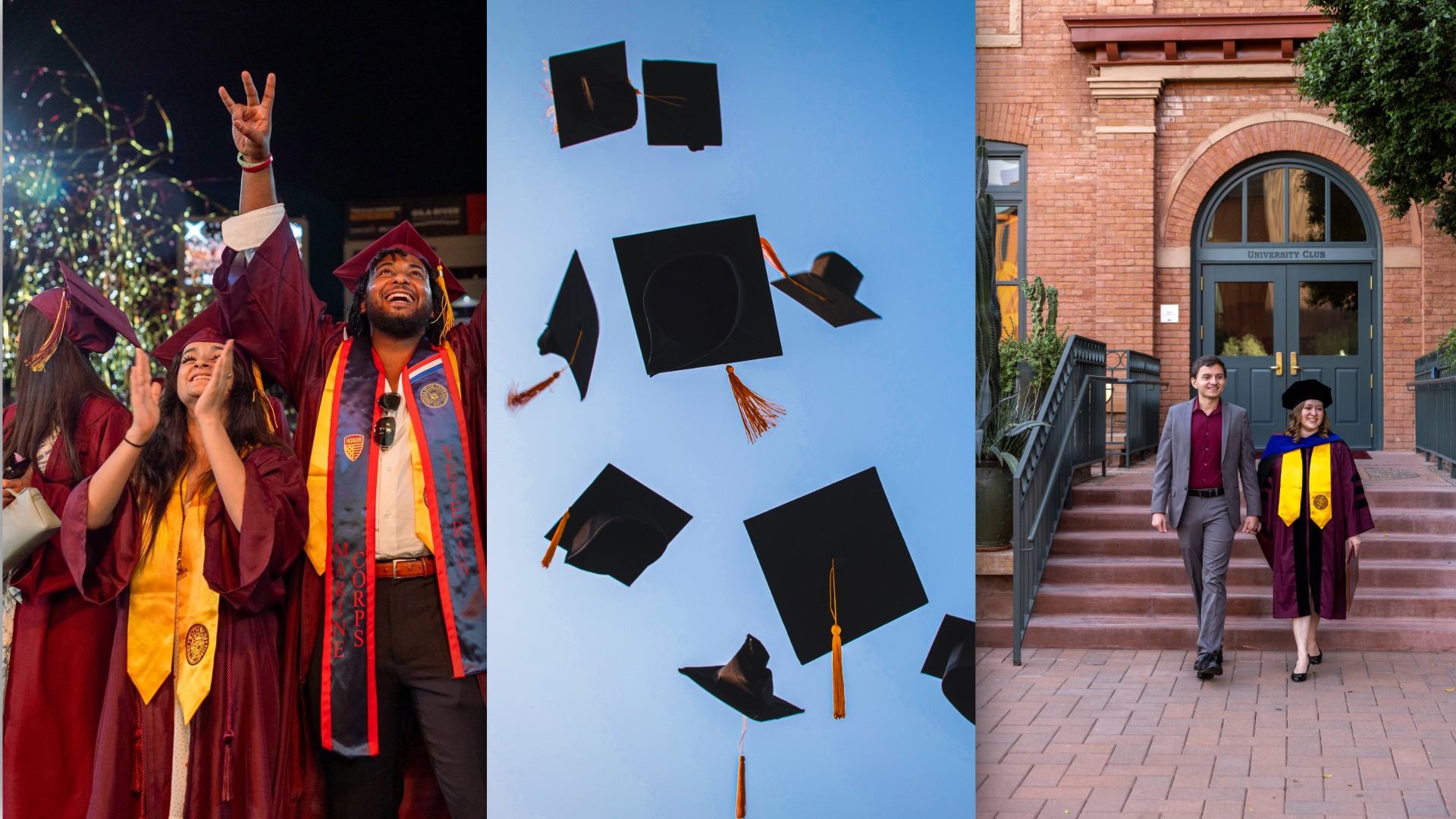
From the student perspective:
The observations below synthesize student perspectives gathered through surveys and informal interviews across undergraduate STEM, professional, and social science programs, as well as the experiences of the student authors.
What's Working in Higher Education
Experiential Learning: Course-aligned projects and case studies that mirror real-world industry challenges.
Mobility & Networking: Platforms (student organizations, university events, etc.) that allow students to build deep professional networks.
Industry-Specific Micro-credentials: Credentials (such as semiconductor manufacturing, data analytics, or UX design) embedded directly into degree pathways.
Opportunities for Redesign
Industry-University-Integrated Pathways: Partnerships that translate into structured and reliable pipelines for internships, applied learning, and post-graduation employment.
Continuity in Advising: Advising systems that enable consistent, long-term student support.
Artificial Intelligence and Emerging Technologies: Educational models that align learning with an AI-shaped future, where students navigate uncertainty, emerging tools, and evolving career pathways in real time.
Industry-University Relationships that translate to opportunity.
Micro-credentials and certificates that translate to real opportunity
In the job market, U.S. employers are 75 percent more likely to hire a candidate who holds both a degree and an industry certificate, demonstrating the learner is coming with verifiable applied skills and not just degree credentials. But if those certificates aren’t available as part of the curriculum, the onus falls onto the student to find the correct certificates and pay for them out of pocket.
Students seeking to enter the job market spend hours preparing for career fairs — interview preparation, resume building and printing, and emotional energy — only to be told: “We don’t have any open roles right now, but please check our careers page,” effectively eliminating the benefit of networking and spending time with the recruiter.
Continuity in Advising
Advising systems built on continuity, relationships, and long-term guidance.
According to NACADA's National Survey on Academic Advising, the median advisor-to-student ratio at four-year institutions sits at approximately 1:296, climbing significantly higher at large research universities. A 2023 student survey covered by Inside Higher Ed found that only 55% of students reported receiving guidance on required coursework and graduation pathways. The system is under strain, and students feel it.
Artificial Intelligence and Emerging Technologies:
Learning environments that connect education to rapidly changing career landscapes shaped by artificial intelligence.
In our last edition of The Co-Lab Brief, higher education leaders focused on how institutions must evolve in response to an uncertain future. This month, we hear from students graduating from those same institutions, where that same uncertainty is already shaping how the future is being understood. The question related to AI is no longer just: Will I find a job? It is: Will the job I trained for still exist by the time I get there?
That anxiety now has a data point. Anthropic's Economic Index, built from real-world AI usage, found that computer and mathematical occupations have the highest observed AI coverage at 35.8%, followed by office and administrative roles at 34.3%, with business, finance, and sales close behind.
What is clear across both perspectives (leaders and students alike) is that the university's relationship to artificial intelligence is neither isolated nor settled. It is a shared question, and that shared urgency is where common ground begins.
In their own words below, students across disciplines at ASU reflect on AI in the context of their education. Their responses are not just provocations, but an invitation for institutions to consider how universities can lead in designing not around artificial intelligence, but alongside the students navigating it in real time.
Perspectives from students at Arizona State University
"We're being prepared for a world where 'adults' are still arguing about whether to accept the gaps. And the frustrating part is we're already living in it, using it, figuring it out ourselves."
- Student, Data Science, Class of 2026
"There is a version of the future where AI in mental health is genuinely transformative and equitable. And there is a version where it's a cost-cutting measure dressed up in the language of innovation, where health systems use chatbots to justify reducing human clinician hours."
- Student, Clinical Psychology, 2027
"There's an opportunity for people who can judge AI output, who have the taste, the cultural literacy, the ethical sensitivity to know when something is wrong or hollow or off. That's a skill that humanities students actually have, if they're trained well."
- Student, Literature, 2026
"We're not asking how to use AI better. We're asking whether the path we chose still leads somewhere. That's a much harder question, and I don't think universities are even close to addressing it honestly."
- Student, Data Science, Class of 2026
"Community, a sense of belonging, a sense of purpose, meaningful connections with peers and professors, and networking are things AI cannot replicate. The value of human connection is worth building the future of learning around."
- Student, Astro & Earth Sciences, 2028
"You can try things, build things, test ideas faster than any generation before us. The gap between 'I have an idea' and 'I made the thing' has never been smaller.”
- Student, Data Science, Class of 2026
Perspectives from students around the world